
FRAMEWORK OF THE CRAFTS
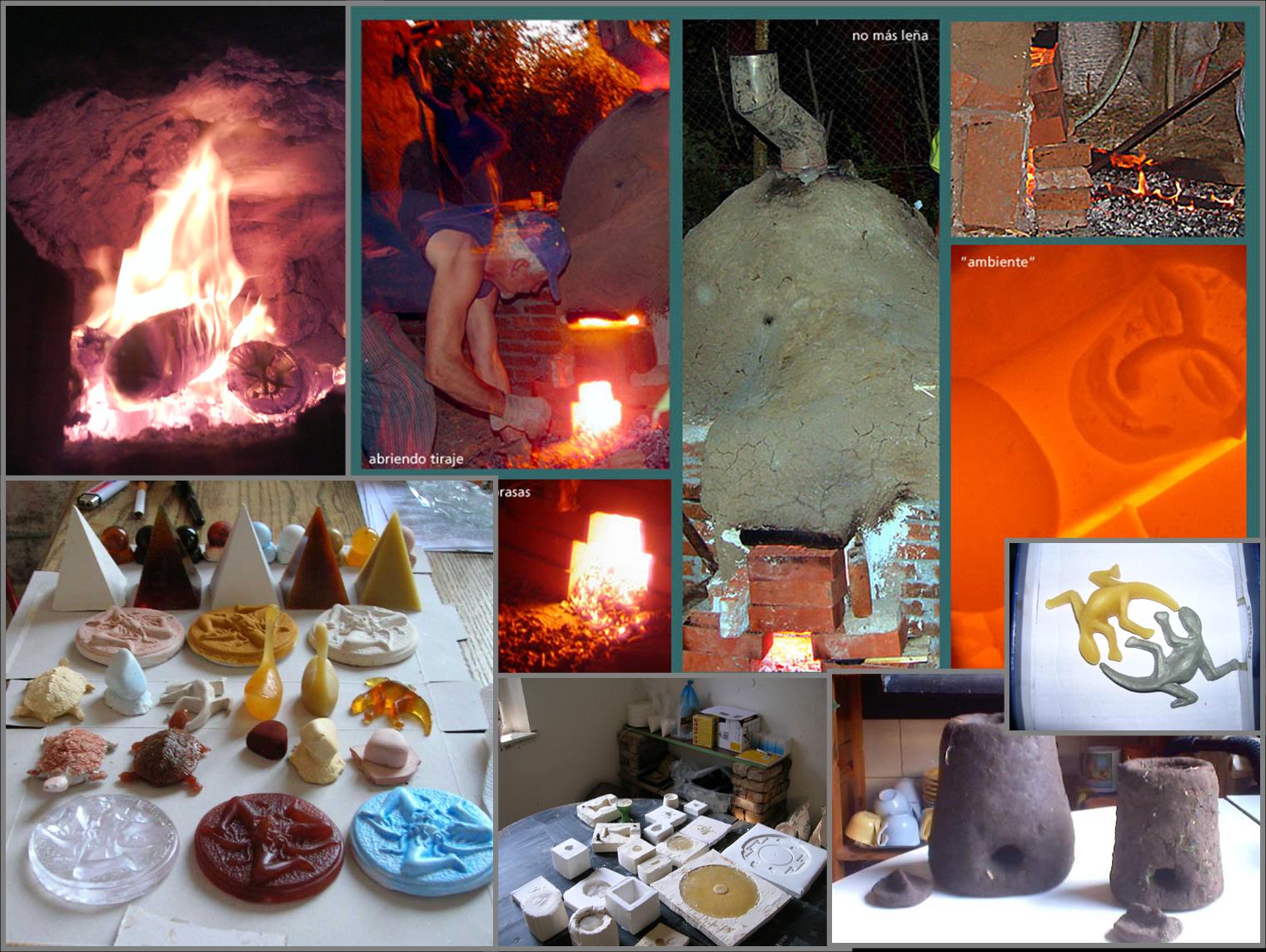
The crafts are carried out in preparation to enter the works of the Disciplines. A craft teaches internal proportion and how to do things in a balanced way. We acquire internal proportion thanks to these works with seemingly external problems related to accuracy and detail. There is a tone that associates internal states and external operations. A Discipline, on the other hand, presents a path of internal transformation. In the Crafts, we work trying to achieve care, proportion and order as well as a growing permanence.
We learn to work in a balanced way with these crafts which may deal with various topics. They may involve work with materials, whether they are those used in the traditional plastic arts or perfumery, etc. They have their rules of work, their tricks and Craft secrets. We have only worked with ceramics, metal and finally glass. This range of work deals with kilns and substances that are transformed. This is different from perfumery where fire is rarely used except in the preparation of essences, or perfumes by means of distillation. In general fire plays no part in perfumery except when synthetics are involved. On the other hand, fire is involved in those Crafts that we know more closely, e.g. ceramics, where it is essential. In any case, the material craft is an interesting work, as its introduction—the work with fire, allows us to recreate how fire originated and was produced. Its “invention” came a long time after its conservation was understood. At that point it was no longer about stealing and conserving fire but producing it. We work with different forms of fire conservation but its production requires more care. An average person trying to produce fire today will not find it easy. The work with fire and kilns is important. The subject of the crafts is very wide-ranging and we are only at the beginning. While we are learning the craft we progressively gain internal proportion, thanks to this external work.
Materials
documents
Framework of the crafts (2718 Ko)
Video 1
see the video
download video
Video 2
see the video
download video
Video 3
see the video
download video
The first stage consists of fire conservation and production. The next stage starts with cold materials (marble, resin, plaster, cement, etc.) and their corresponding moulds. Then follows the stage dedicated to the work that requires higher and higher temperatures in the following order: initially ceramics, after that metals such as pewter, aluminium, copper, bronze and iron. The work involves the use of moulds, tools and appropriate ovens.
A material, produced by the Centre of Studies of Punta de Vacas and translated by the Centre of Studies of La Belle Idée, combines the accumulated experiences in the different points of the planet and gives recommendations for safety measures. Therefore it is recommended to study this material before starting these works. Furthermore we recommend all the groups to call upon a person who already has experience about the stage to be worked on, for advice, before starting a new stage. (Consult the person responsible for the workshop if needed).
The workshops are made available at La Belle Idée Park to be able to complete the whole process. In general we work in groups and occasionally individually. In any case, bookings are necessary to make sure everybody can access a working space. For security reasons, each group can only have a maximum of ten people. (Apart from exceptional occasions in which the main ovens are built. In that case, a joint activity will be programmed and published in the “Open Doors“ activities).
There is no specific financial contribution requested for the use of the workshops. In the light of making this space grow together, we ask of each group to come with the basic materials they will use during their session and leave the environment every time a bit more equipped than before they came (adding a tool, a solvent, a little machine, a mould...) In this way the space will be ours, and it will grow in tools and improvements as we use it.
To book the workshop, send an e-mail to François Baudoin (francoisbaudoin@gmail.com)) with details about dates, number of persons and the activity to be developed (ovens, cold materials, forge…)
The day at the park and, if necessary, accommodation are managed by the Park Commission. Bookings are made through the web-site (bookings site)as are all other activities.